
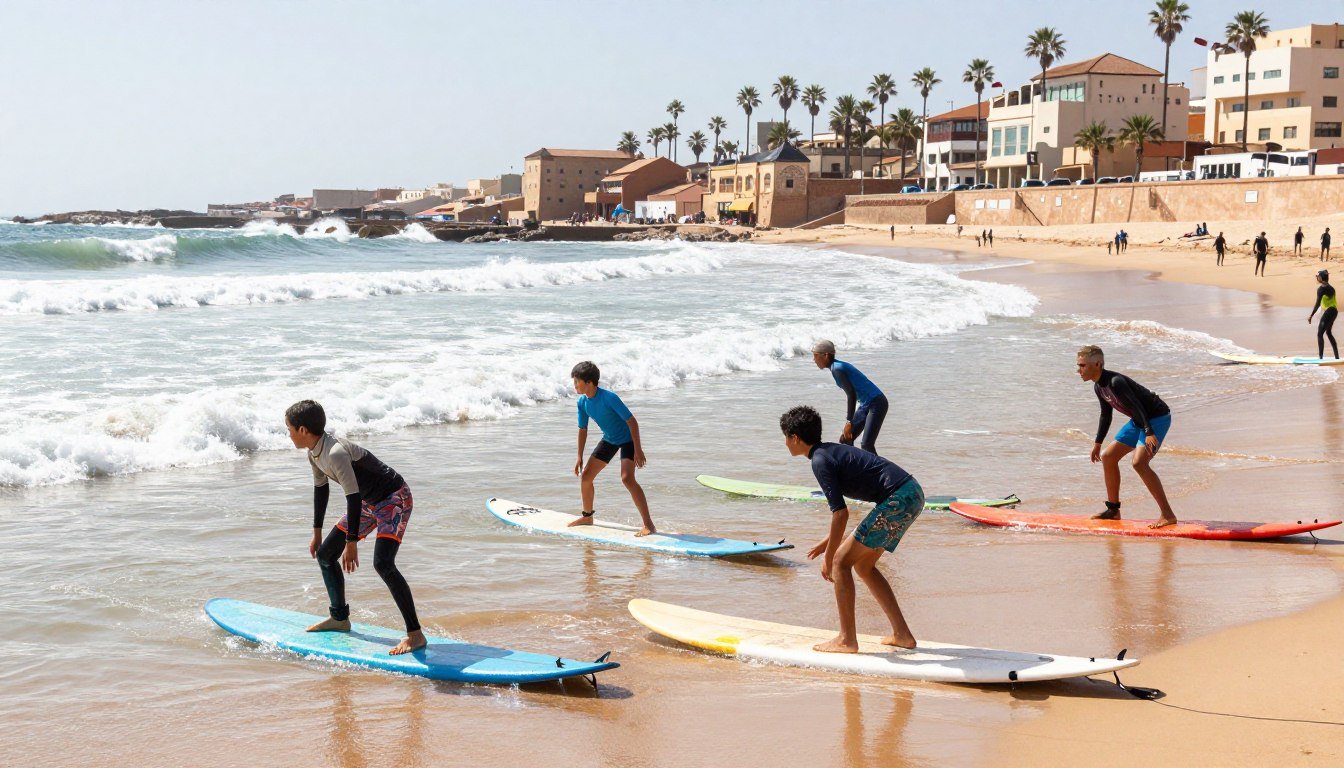
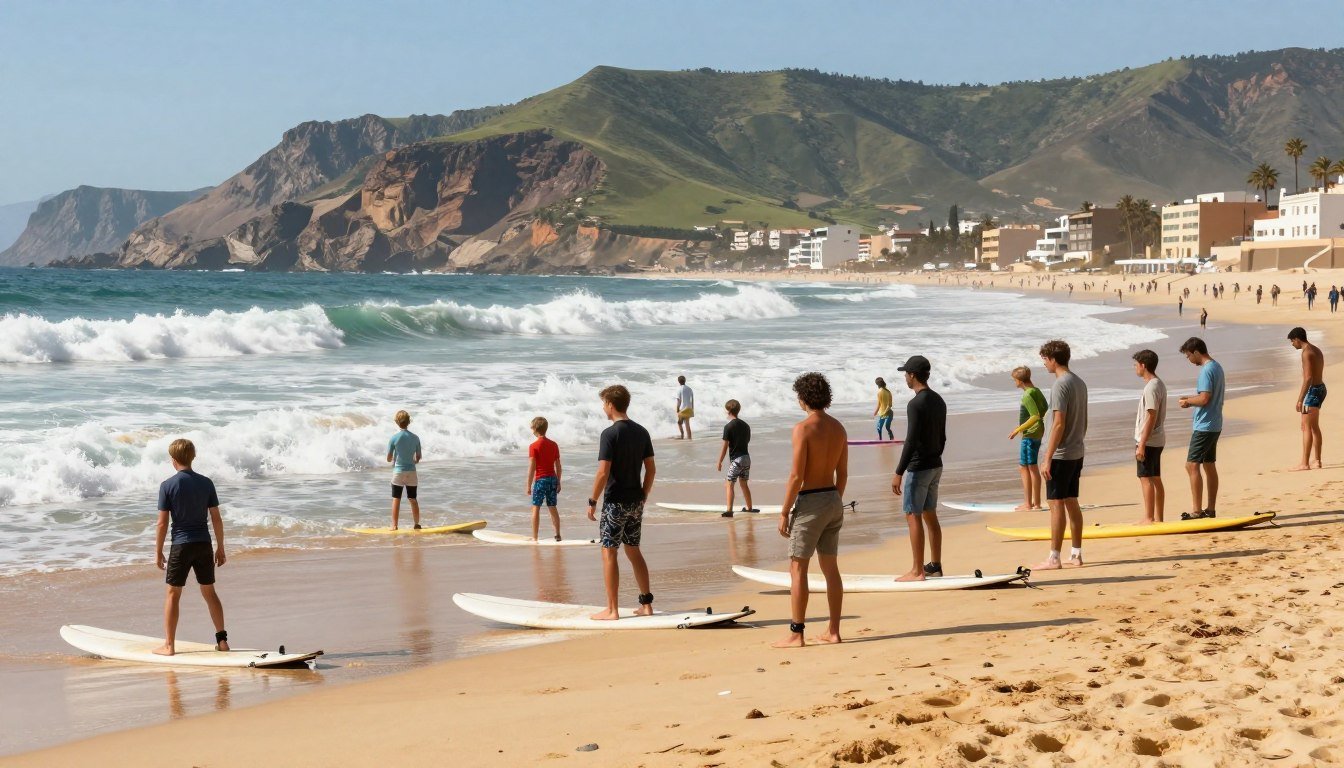

Have you wondered whether Morocco’s sunlit coast holds your perfect wave? Many travelers dream of mastering the ocean but feel unsure about starting. With good preparation and local guidance, everyone can learn to surf in Agadir.
Our team created this complete route to help you find the region’s best beaches and professional schools. We explain how to choose equipment and find conditions that suit your skill level. Beginners and experienced surfers can enjoy this unmatched accessibility for water sports.
Our expert advice will help you gain confidence and catch your first wave. Follow our steps to surf a agadir coastline safely and with ease.
Key Takeaways
- Discover the best seasonal conditions for beginners in Morocco.
- Identify top-rated local schools for professional instruction.
- Understand the essential gear required for your first session.
- Learn safety protocols to protect yourself in the water.
- Follow our proven progression path to master basic techniques.
Why We Recommend Agadir for Learning to Surf
Our team recommends Agadir’s sandy shores for your first surfing experience. This coastal city offers ideal conditions and professional support for every newcomer. Complete novices and improving surfers find a welcoming atmosphere that is hard to match elsewhere.
What Makes Agadir Suitable for First-Time Surfers
The main reason to choose Agadir is its steady waves. Agadir surf beaches have long, sandy stretches with gentle, rolling waves that build confidence. Unlike rocky reefs, these sandy bottoms offer a forgiving place for inevitable tumbles.
Clean water and manageable swell sizes help students focus on technique instead of battling the ocean. These waves suit Agadir beginner surfing, with longer rides and more practice time each session.
How Agadir Combines Beach Access, Mild Weather, and Surf Services
Good logistics can make a trip successful, and Agadir is easy to reach. Most spots are a short drive from the city center, so reaching the water is simple. Its mild climate lasts all year, letting you enjoy the ocean in every season.
Local services also support your progress. A wide range of beginner surf lessons Agadir providers offer quality equipment and expert coaching. These services give you what you need to stay safe and improve quickly.
What We Cover in This Step-by-Step Surf Guide
To help you enjoy your time in Morocco, this guide covers each essential part of your journey. It uses practical steps to make complex movements easier to manage. The guide covers these core areas:
- Preparation: How to ready your body and mind for the water.
- Equipment: Selecting the right board and gear for your skill level.
- Fundamentals: Mastering land-based drills before you paddle out.
- Technique: Tips for standing up and riding your first wave.
- Safety: Understanding ocean etiquette and local beach rules.
Choose the Best Time to Surf in Agadir
People often ask about the best time to surf Agadir because seasons change the waves. Planning around weather patterns helps you enjoy your time in the water.
Understanding the Surf Season in Agadir
The surf season in Agadir usually lasts all year, but ocean conditions change by month. These patterns help you set realistic expectations for Morocco’s Atlantic coast.
Why Autumn and Winter Bring Larger, More Consistent Waves
From October through March, the North Atlantic sends powerful swells to Morocco’s coastline. These months suit surfers seeking consistent, larger waves and an exciting challenge.
Why Spring and Summer Suit Beginners and Casual Learners
If you are starting, spring and summer offer a gentler experience. Smaller, easier waves make this the best time to surf Agadir for building confidence.
Checking Agadir Surf Conditions Before Booking
Before booking your travel dates, monitor Agadir surf conditions. Environmental factors determine whether the water suits a lesson that day.
Wave Height, Swell Direction, Wind, and Tide
Several factors shape surf quality. We recommend watching these measurements:
- Wave Height: Measured in feet, this indicates the size of the incoming swell.
- Swell Direction: Determines how the waves wrap around the local headlands.
- Wind: Offshore winds are preferred as they groom the wave face.
- Tide: Certain spots perform better at high tide, while others favor low tide.
How Local Instructors Interpret Daily Conditions
Professional instructors use local knowledge to read the ocean accurately. They study forecasts to support your safety and progress.
| Condition | Beginner Impact | Safety Priority |
|---|---|---|
| Low Wind | High | Excellent |
| Small Swell | High | Excellent |
| Strong Current | Low | Caution Required |
Selecting the Right Time of Day for Your Lesson
Beyond the season, the time of day affects your comfort. We suggest booking lessons in the early morning.
Morning sessions usually bring lighter winds and cleaner water, ideal for learning. Avoiding the afternoon breeze creates a smoother, more productive session.
Pick the Right Surfing Spots in Agadir
We help you choose among the diverse surfing spots in Agadir for a safe, thrilling first experience. The right setting builds confidence and improves your technique on the water.
Agadir Beach for Convenient Beginner Lessons
Agadir Beach is one of the most reliable beginner beaches Agadir has to offer. Its sandy bottom and gentle waves create a safe place for first-time surfers.
Taghazout and Its Accessible Beginner-Friendly Breaks
Just a short drive north, Taghazout surfing offers world-class access. Its sheltered bays help beginners move from white water to small, clean waves.
Banana Point for Longer Rides and Progression
When you want to build endurance, Banana Point surfing offers longer, gentler rides. This spot suits surfers who know the basics and want to practice turns and balance.
Devil’s Rock and Crocro Beach for Guided Practice
Devil’s Rock and Crocro Beach offer excellent conditions for guided practice. They suit students working with instructors on pop-ups and wave selection.
When to Visit More Advanced Breaks Near Agadir
As your skills grow, you may want to explore the region’s famous, challenging breaks. Wait until you control your board and understand ocean safety before trying them.
Why Anchor Point and Killer Point Require Stronger Skills
Anchor Point and Killer Point are legendary for powerful, fast-breaking waves. Rocky entries and strong currents can overwhelm beginners, making these spots unsuitable for them.
How We Match Each Beach With the Surfer’s Experience
We assess your current ability before choosing the safest, most useful environment. Our goal is steady progress that challenges you without exceeding your comfort zone.
| Surf Spot | Difficulty Level | Best For |
|---|---|---|
| Agadir Beach | Beginner | First lessons and safety |
| Taghazout | Beginner/Intermediate | Learning to ride clean waves |
| Banana Point | Intermediate | Improving ride length |
| Anchor Point | Advanced | Experienced wave riding |
Book One of the Best Surf Schools in Agadir
Selecting from the best surf schools in Agadir helps ensure a safe, fun time on the waves. Many coastal options exist, so comparing them can greatly improve your experience.
How to Compare Surf Schools in Agadir
Instructor Qualifications, Safety Standards, and Group Size
Prioritize schools that employ certified instructors with valid lifeguard credentials. A low student-to-instructor ratio improves safety and provides personalized feedback during your session.
Lesson Duration, Transport, Equipment, and Insurance
Check whether the school provides comprehensive insurance coverage for all participants. Confirm that lessons allow enough time for land-based practice and provide reliable transport to the best local breaks.

What to Confirm Before Reserving a Surf Lesson
Meeting Points, Cancellation Policies, and Weather Flexibility
Before finalizing your plans, verify the exact meeting point for your surf lessons Agadir. Also, understand the cancellation policy, especially for weather changes that may affect ocean conditions.
Whether the School Offers Beginner, Intermediate, and Private Sessions
Ensure the school offers formats that match your skill level. Options can support your progress, from beginner groups to a private session that refines your technique.
| Feature | Standard School | Premium Surf School |
|---|---|---|
| Instructor Ratio | 1:8 | 1:4 |
| Equipment Quality | Basic | Professional |
| Insurance | Limited | Full Coverage |
| Transport | Self-Arrival | Included |
Why Booking Our Surf Experience Online Simplifies Planning
What Information to Provide When Making a Reservation
When you book surf lessons Agadir through our platform, we make planning simple. Provide your experience level, preferred dates, and goals for your stay.
How We Help Select a Suitable Beach and Lesson Format
We use your details to match you with the right environment for your ability. We analyze local swell forecasts and your profile to choose the most beginner-friendly beach for your lesson format.
Step 1: Prepare for Your First Surf Lesson
We want your first surf lesson in Agadir to feel smooth and stress-free. Organizing your gear and learning the basics can build confidence before you reach the shore.
Pack the Essential Clothing and Beach Items
Swimsuit, Rash Guard, Towel, Sunscreen, and Drinking Water
When you prepare to learn to surf in Agadir, pack the right gear. Bring a comfortable swimsuit and a high-quality rash guard to prevent board irritation.
Pack a large towel for drying and plenty of drinking water for Morocco’s strong sun. With these items ready, you can focus on your technique.
Why Reef-Safe Sunscreen and Secure Accessories Matter
Morocco’s sun can be intense, so choose reef-safe sunscreen for responsible ocean care. It protects your skin without harming delicate marine life.
Leave jewelry and glasses in a secure locker or at your hotel. Fewer accessories reduce the risk of loss and help you stay focused.
Eat, Hydrate, and Rest Before Entering the Water
Surfing demands energy and physical effort. Eat a light, nutritious meal about two hours before your lesson to fuel your body.
Avoid heavy meals because they may make you sluggish in the water. Sleep well before your session to support balance and focus.
Learn the Basic Surfing and Beach-Safety Briefing
Understanding surf safety Agadir rules is the most important preparation step. Your instructor will explain rules that protect everyone in the water.
Surf Etiquette, Right of Way, and Keeping Distance
Respecting the lineup is central to surf culture. Learn the right of way: usually, the surfer nearest the wave’s peak has priority.
Keep a safe distance from other surfers to prevent collisions and practice calmly. Follow your instructor’s advice in crowded areas.
How to Identify Currents, Safe Zones, and Instructor Signals
Your instructor will show you rip currents and safe zones for entering and leaving the water. Spotting these patterns is vital for beginners.
Watch your instructor’s hand signals from the beach or water. These signals guide your movements and help you stay within your comfort zone.
Step 2: Select the Correct Surfboard and Equipment
Your success on the waves depends on choosing the right equipment before you paddle out. The right tools help you stay safe while learning basic ocean navigation.
Start With a Stable Soft-Top Beginner Board
For your first sessions, choose a soft-top board. A beginner surfboard Agadir shops provide uses foam materials for extra buoyancy and safety.
How Board Length, Width, and Volume Affect Balance
Longer, wider boards create a stable platform, making it easier to stand up. More volume helps you paddle faster and catch waves with less effort. These features help you keep your balance during your first rides.
Use the Right Wetsuit for Agadir Water Temperatures
Atlantic waters can feel cool, so proper gear is vital for comfort. High-quality Agadir wetsuits help you stay in the water longer without feeling cold.
Choosing Between a Full Suit, Springsuit, or Rash Guard
A full suit suits cooler mornings, while a springsuit works well during warmer afternoons. In intense sun, a rash guard protects your skin from irritation and UV rays.
Check Your Leash, Fins, and Wax Before Paddling Out
Inspect your leash and ensure it attaches securely to your ankle. Check that your fins are tight, then apply fresh wax to the deck for better grip. These steps help prevent equipment failure in the surf.
Decide Between Surf Rentals Agadir and School Equipment
Your experience level can guide your gear choice. You can choose professional surf rentals Agadir services or use equipment from your instructor.
When Surfboard Rentals Agadir Work for Independent Practice
If you know the basics and want solo practice, surfboard rentals Agadir shops offer flexible daily rates. This suits surfers confident navigating the lineup without direct supervision.
Why Beginners Benefit From Equipment Supplied by Instructors
Beginners benefit from school equipment because instructors choose boards for their size and weight. This gives you safe, effective gear for your current learning stage.
| Equipment Type | Best For | Primary Benefit |
|---|---|---|
| Soft-Top Board | Absolute Beginners | Maximum Stability |
| Full Wetsuit | Cooler Water | Thermal Protection |
| School Gear | Guided Lessons | Expert Selection |
| Rental Gear | Independent Practice | Flexibility |
Step 3: Master the Land-Based Surfing Fundamentals
A strong sand-based foundation can shape your first surf session. Rehearsing each movement builds muscle memory for handling Agadir’s waves.
Practice the Correct Prone Position on the Board
The prone position surfing technique begins with lying flat on your board. Center your body so the nose stays above the water.
Keep your legs together and your toes pointed. This streamlined posture keeps you steady while paddling toward the lineup.
Learn the Pop-Up Movement Before Entering the Water
The surf pop-up technique is a key skill for every beginner. Practice it on the sand until the motion feels natural.
Place the Hands Correctly and Keep the Chest Lifted
When ready to stand, place your palms flat on the deck near your lower ribs. Keep your fingers tucked in and lift your chest.
Look toward the horizon instead of looking down at your feet. This position helps prepare you for a controlled rise.
Bring the Front Foot Forward Without Kneeling
Avoid pushing up onto your knees first. Instead, use one quick movement to bring your front foot under your chest.
Find a Balanced Stance and Bend the Knees
After standing, bend your knees to lower your center of gravity. This stance helps you ride the wave without losing balance.
Comparing Regular and Goofy Foot Positions
Knowing your regular and goofy stance helps you feel comfortable. Use the table below to find which foot should lead.
| Stance Type | Leading Foot | Back Foot |
|---|---|---|
| Regular | Left | Right |
| Goofy | Right | Left |
Rehearse Falling Safely Away From the Board
Learning to wipe out matters as much as learning to stand. Practicing safe surfing falls helps you stay calm after losing balance.
Protecting the Head and Avoiding Contact With the Fins
Always fall away from your board, never toward it. Cover your head and face with your arms.
Try to land flat to avoid the shallow bottom and your surfboard’s sharp fins.
Step 4: Paddle Into the Right Beginner Waves
Moving from dry land into the ocean is an exciting step in your surf journey. We keep your first water session safe and useful by choosing controlled settings.
Warm Up in Shallow Water With Instructor Supervision
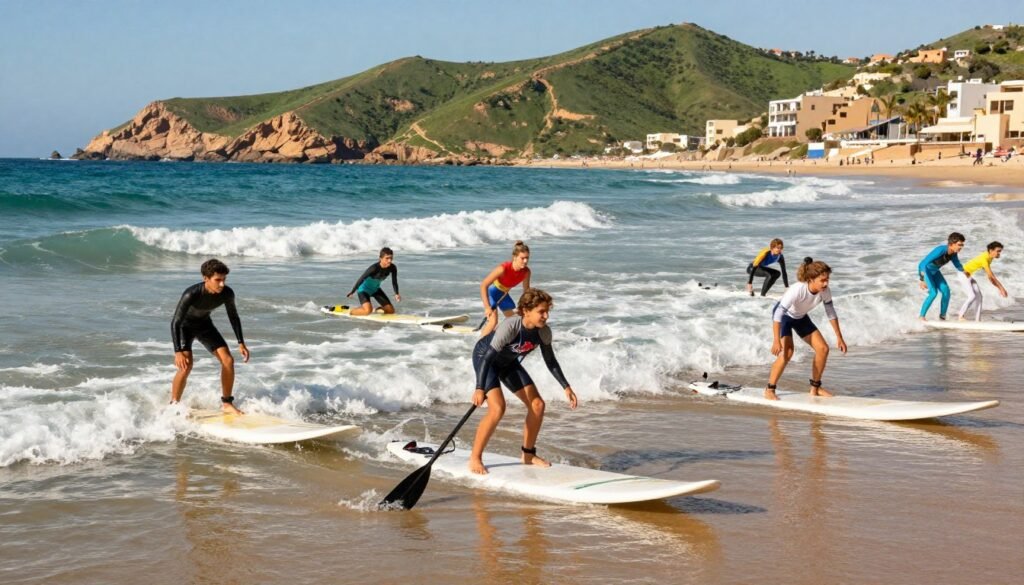
Before you catch waves, we begin with a short warm-up in waist-deep water. It helps you adjust to your board’s buoyancy and the ocean’s movement. Prioritizing surf lesson safety helps you gain confidence while your instructor checks your balance and stance.
Learn to Carry and Position the Board Safely
Hold the board under your arm, with the fins facing outward and the board parallel to your body. When entering the water, keep the board between you and incoming waves. This helps you stay in control and avoid injuries.
Choose Broken Waves Before Attempting Unbroken Waves
Choosing the right wave energy is key to learning. Start with beginner waves Agadir locals often call “whitewater.” These waves have already broken, giving beginners a gentle push.
How Whitewater Offers More Predictable Momentum
Whitewater surfing works well for beginners because its energy is steady and easy to follow. Unbroken waves need precise timing, but whitewater gives you steady forward motion. This helps you practice your pop-up without worrying about the wave face.
How to Read Wave Size, Shape, and Closing Sections
With practice, you will spot waves that match your skill level. Choose soft, crumbling waves instead of steep, fast-breaking peaks. Avoid “closing sections,” where the whole wave breaks at once, because they can be hard to ride safely.
Time the Paddle and Keep the Board Pointed Toward Shore
When ready to paddle into waves, point your board straight toward the beach. Keep your body centered to stabilize the board. As whitewater nears, use steady, strong strokes to match its speed.
Step 5: Stand Up, Ride, and Improve Your Technique
Moving from paddling to standing is an exciting part of your surfing journey. Mastering the art of stand up surfing requires patience and practice in Agadir’s beautiful waters. We help turn early efforts into a smooth, controlled ride.
Catch the Wave With Two Strong Paddle Strokes
To successfully catch a wave, time your paddling with the incoming swell. When the board starts gliding forward, commit to two final, powerful strokes. These extra pushes match the wave’s speed and make standing easier.
Complete the Pop-Up in One Controlled Movement
The surf pop-up moves you from lying down to standing. Complete it in one quick, controlled movement instead of crawling up the board. Consistency helps you maintain momentum.
Keep the Feet Parallel and the Weight Centered
Once you stand, your stance controls stability. Keep your feet parallel to the board’s stringer and balance your weight between them. This centered position stops the board from tipping and helps you stay upright longer.
Look Toward the Beach Instead of Down at the Board
Looking at your feet feels natural, but it can harm your balance. Keep your eyes on the beach or the direction you want to travel. Looking forward aligns your shoulders and hips, which improves stability.
Control Direction by Shifting Weight Gradually
Steering your board requires small, careful movements. Shift your weight slightly toward your heels or toes to begin gentle turns. Avoid sudden movements, which can make you lose balance and fall into the water.
Reset After Each Attempt and Apply Instructor Feedback
Surfing involves trial and error. After each ride, paddle back to the lineup and consider what worked. Use this checklist to improve surfing technique during your session:
- Ensure your hands are placed flat under your shoulders before popping up.
- Keep your knees bent to absorb the energy of the wave.
- Listen closely to your instructor’s cues regarding your posture.
- Stay relaxed to allow your body to react naturally to the board’s movement.
| Action | Goal | Benefit |
|---|---|---|
| Paddle Strokes | Match wave speed | Easier pop-up |
| Pop-up | One fluid motion | Better balance |
| Weight Shift | Gradual pressure | Controlled turns |
Step 6: Stay Safe as You Progress Around Agadir
Staying safe along Agadir’s beautiful coast matters to every developing surfer. After your first lessons, strong Agadir surf safety habits keep sessions fun and useful. Always check the conditions before you paddle out.
Respect Local Surf Etiquette and Priority Rules
Understanding surf etiquette helps everyone share the water. The surfer nearest the wave’s peak has priority. Look around before taking a wave, so you do not drop in on another surfer.
- Never paddle directly in front of a surfer already riding a wave.
- Communicate clearly with others in the lineup to avoid collisions.
- Respect the locals who have been surfing these breaks for years.
Manage Currents, Shorebreaks, Rocks, and Crowded Lineups
Agadir has varied conditions, so stay alert for hazards. Strong currents can pull you from your spot, while rocky bottoms make entry and exit risky. If the lineup feels crowded, move to a quieter beach section.
When to Exit the Water and Ask for Assistance
Knowing your limits shows good judgment. If you feel tired, notice stronger wind, or face waves beyond your level, return to shore. Always ask for help from your instructor or a lifeguard if conditions overwhelm you.
Use the Buddy System and Follow Beach Safety Instructions
Use the buddy system whenever you enter the water. A partner watching you adds extra safety. Always follow safety instructions from your surf school or local beach authorities.
Know When Advanced Surfing Spots Are Beyond Your Level
Famous breaks can feel exciting, but be honest about your current skills. Trying waves beyond your level can cause injury or create danger. Master the basics at beginner-friendly beaches before tackling harder terrain.
Why Anchor Point and Killer Point Should Be Guided Progression Goals
Spots such as Anchor Point surfing and Killer Point surfing are world-class, but experienced riders should use them. These spots have powerful waves and complex reef structures, which require strong skills. Treat them as long-term goals, and visit only with professional guidance after building a solid foundation.
Plan a Surf Camp or Continued Practice in Agadir
Planning your next steps in Agadir can turn a simple vacation into a true surfing journey. Choose a clear water plan to build skills steadily while enjoying the unique coastal culture.
Choose Between Daily Lessons, Multi-Day Courses, and Surf Camps Agadir
Your plan should match your goals and stay length. A clear structure can keep you motivated and focused on personal growth.
Which Option Suits a First-Time Visitor
For beginners, daily lessons offer a low-pressure way to meet the ocean. They let you test your interest without a long-term commitment. If you get hooked, you can move into a more structured program.
Which Option Builds Confidence Through Repetition
If you want to improve, multi-day surf courses Agadir provide steady practice for building muscle memory. Alternatively, surf camps Agadir offer an immersive setting where you live and breathe the sport. Both choices suit surfers seeking continued surf practice in a supportive community.
Combine Surfing in Morocco With Local Experiences
The value of surfing in Morocco comes from balancing active days with cultural discovery. You can combine training with the vibrant local life found across the region.
Exploring Taghazout, Agadir’s Corniche, and Nearby Markets
After your morning session, explore the charming village of Taghazout or walk along the scenic Agadir Corniche. Visit local markets for authentic Moroccan flavors and crafts. This mix of activity and rest can make your trip memorable.
Track Progress and Set Realistic Next Skills
Tracking your progress supports long-term success. Keep a simple session log to see how far you have come.
Moving From Whitewater Rides to Green-Wave Takeoffs
Your first goal is to master whitewater rides. The real thrill begins when you transition to green-wave takeoffs. This change requires better timing, a refined pop-up, and strong balance as you stand.
When to Consider a Smaller Board or More Challenging Break
When you feel comfortable on your soft-top board, you may be ready to move on. Use the table below to decide when to upgrade your gear and location.
| Skill Level | Board Type | Ideal Break |
|---|---|---|
| Beginner | Soft-top (Long) | Agadir Beach |
| Intermediate | Hard-top (Mid-length) | Banana Point |
| Advanced | Shortboard | Taghazout Reefs |
Always remember that continued surf practice is the key to mastering these transitions. Stay patient, listen to your instructors, and enjoy each wave while surfing in Morocco.
Conclusion
Mastering the waves takes patience, proper equipment, and expert guidance. You now know how to surf a agadir safely and with confidence. Success starts by choosing the right season and beginner-friendly spots for your skill level.
Practice land-based drills and supervised whitewater sessions before trying larger breaks. Consistent effort helps you learn to surf in Agadir and build ocean awareness. Each session brings you closer to riding unbroken waves with ease and control.
Our team invites you to book your next session through our online platform to simplify your travel plans. Choose one lesson or a multi-day surf camp for structure and rapid improvement. Secure your spot and experience the best breaks along the Moroccan coastline.
