
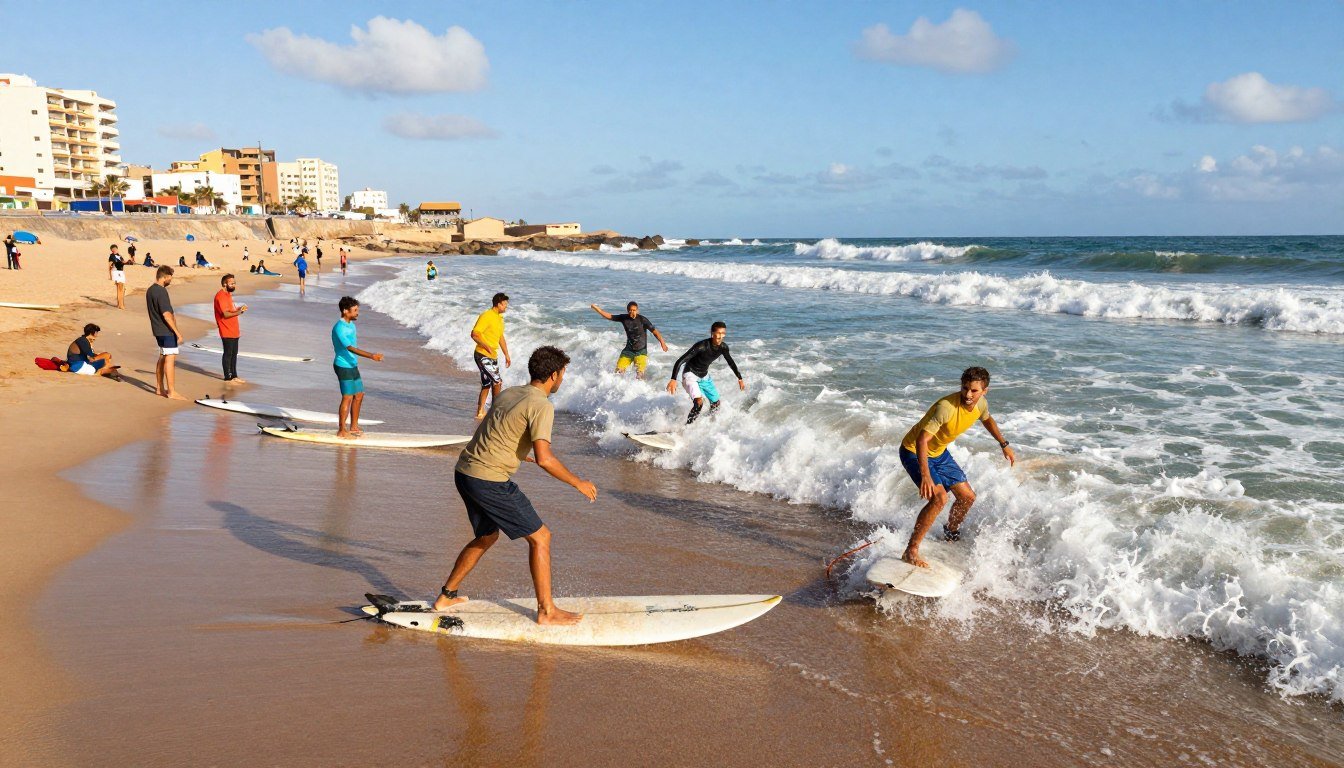
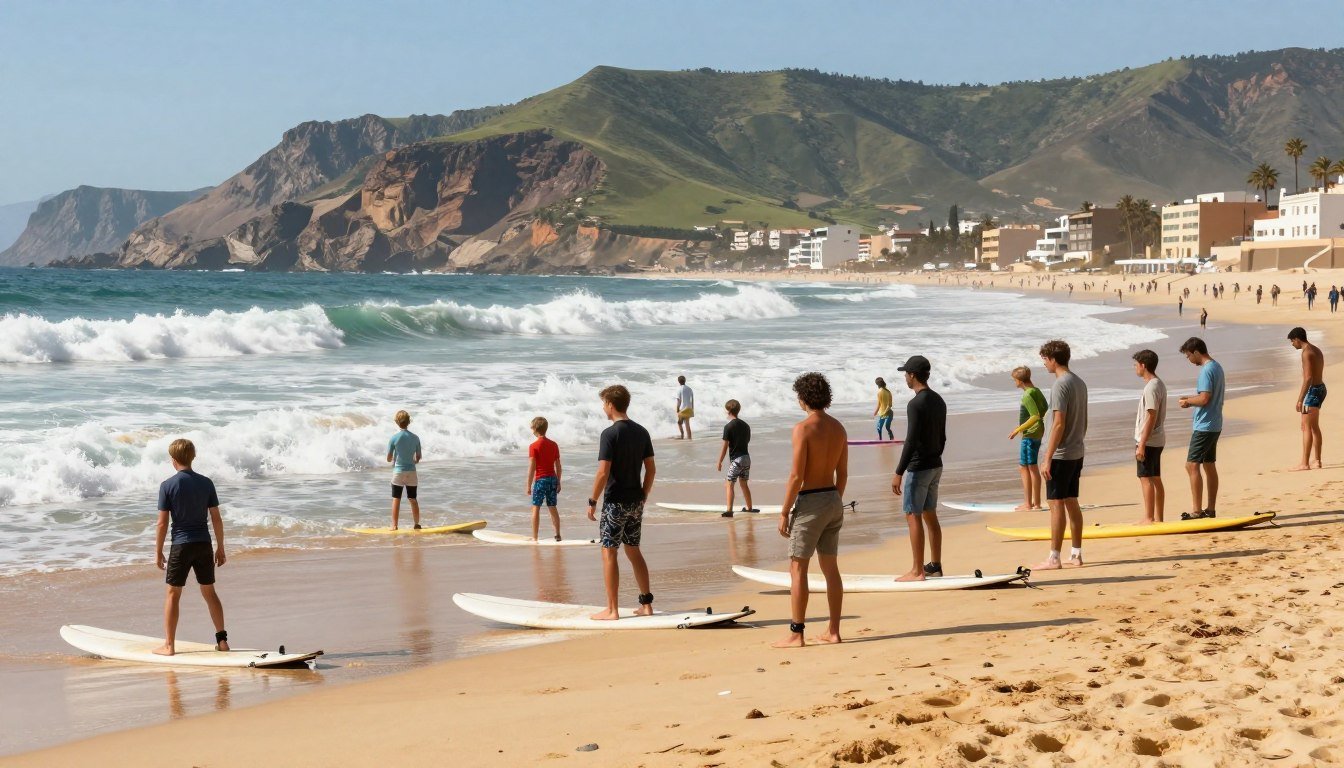
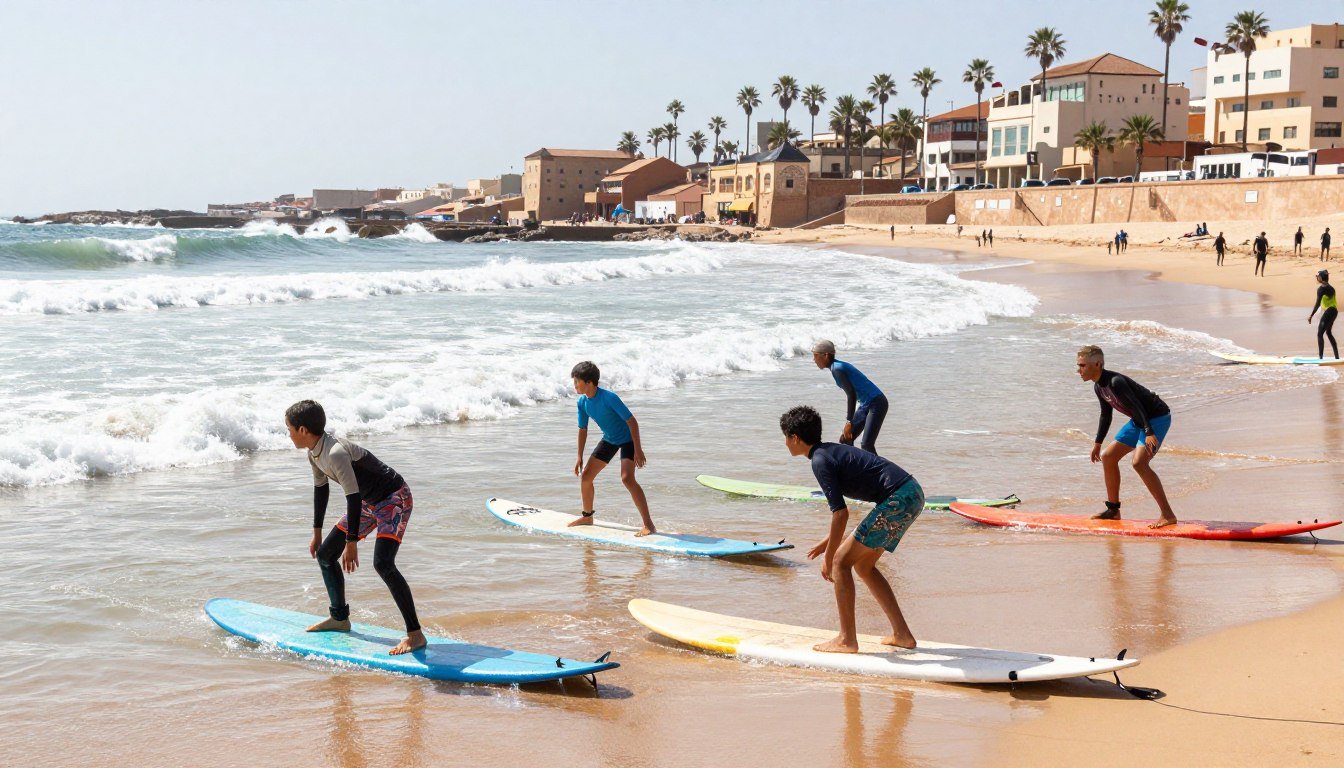
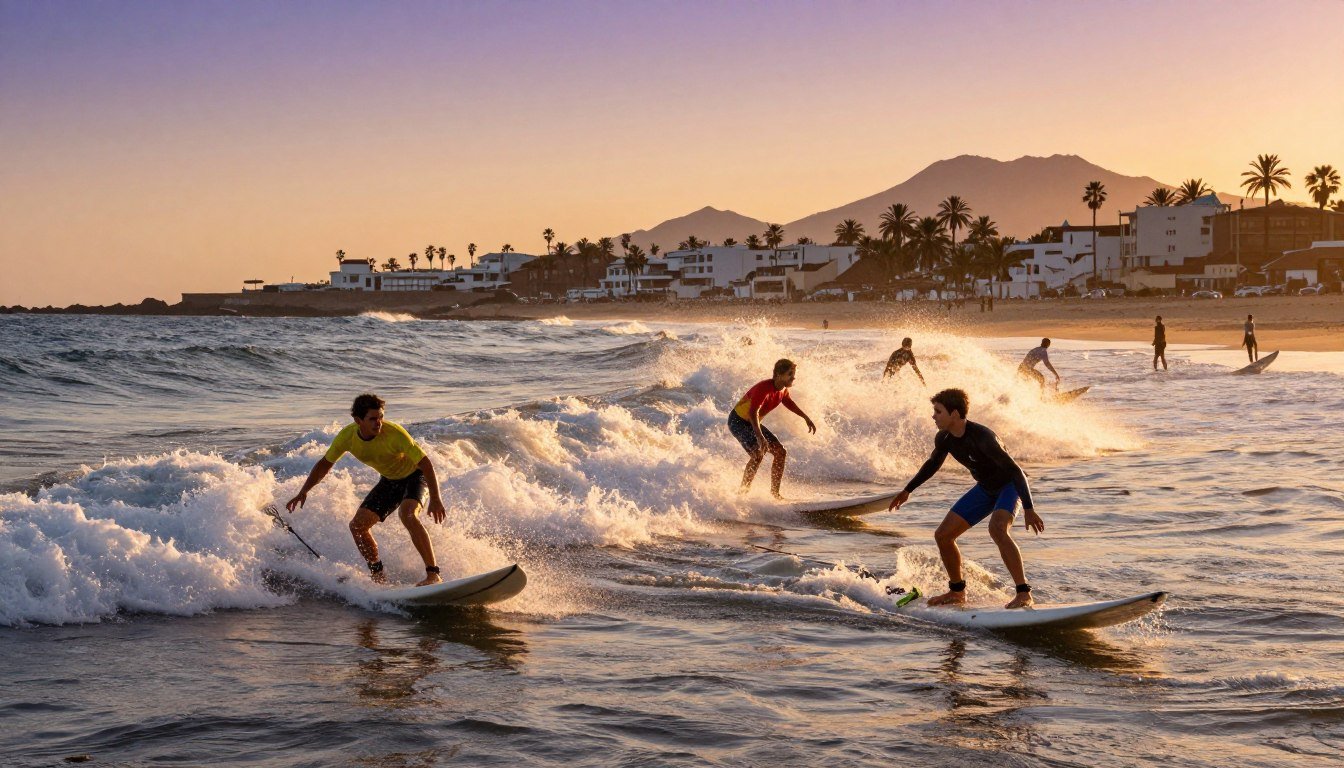
Can you master waves where the desert meets the Atlantic Ocean? Planning a surfing vacation in Agadir needs more than booking a flight. You must understand local swells, tide patterns, and the coastal region’s vibrant culture.
Our surf agadir morocco guide helps you explore the coastline with confidence. It covers essential preparation, including equipment choices and respect for local communities. Beginners and skilled surfers can use these tools for safe, rewarding time on the water.
Key Takeaways
- Understand the best seasonal conditions for your trip.
- Learn how to choose the right board for your skill level.
- Prioritize safety protocols at popular local beach breaks.
- Respect local customs and coastal environmental guidelines.
- Follow our structured progression plan for consistent improvement.
Plan Our Surf Agadir Morocco Trip Around the Right Conditions
Successful surf holidays in Agadir need a clear plan that matches our personal skill levels. Setting goals early helps us enjoy productive time in the water.
Set Our Surfing Goals Before Booking
First, we must decide whether to build confidence on our first waves or improve advanced maneuvers. Beginners should choose locations with steady, gentle whitewater.
Experienced surfers may prefer spots with longer, unbroken green waves. These goals help us choose the right coaching level and travel season.
Choose Between a Surf Camp, Hotel, or Independent Trip
Our accommodation choice can shape the entire experience. Many travelers choose surf camps in Agadir for daily transport to the best breaks.
- Surf Camps: Ideal for social interaction, structured lessons, and stress-free logistics.
- Hotels: Better for those who want privacy and a more traditional vacation experience.
- Independent Trips: Best for experienced surfers who prefer total freedom and local exploration.
Budget for Transportation, Lessons, Equipment, and Meals
A realistic budget supports a smooth trip. We should plan daily costs beyond lodging, including board rentals and local transport.
Daily expenses may include professional coaching and equipment maintenance. Planning ahead prevents surprises and keeps our attention on the waves.
Choose the Best Season for Surfing in North Africa
Seasonal Atlantic patterns help us master surfing in North Africa. Matching travel dates to Moroccan wave conditions makes each water session useful and enjoyable.
Match Winter Swells With Our Experience Level
Winter brings the coast its strongest, most consistent energy. Long-period swells create powerful waves for experienced surfers seeking challenging point breaks.
Intermediate and advanced surfers can use this prime window to test their skills on world-class waves. However, ocean power demands strong fitness, careful judgment, and excellent board control.
Use Spring and Autumn for Milder Crowds and Flexible Conditions
Spring and autumn offer a useful balance for surfers seeking variety. Pleasant weather and moderate swells make conditions easier than winter.
These shoulder seasons offer flexible conditions for surfers with many skill levels. Less crowded lineups often give us more chances to catch waves without heavy competition.
Understand Summer Winds, Smaller Waves, and Beginner Advantages
Summer in Morocco brings smaller, frequent waves that suit people new to surfing. Although the swell has less power, its steady pattern makes surfing in North Africa accessible to beginners.
We should prepare for common afternoon winds. Early sessions usually bring glassy conditions before the wind grows stronger.
Check Swell, Wind, Tide, and Water Temperature Forecasts
Before visiting the beach, we must check reliable forecast platforms. We focus on these data points for a safe, successful session:
- Swell height and period: Determines the size and power of the incoming waves.
- Wind direction and speed: Offshore winds are essential for clean, rideable wave faces.
- Tide charts: Many Moroccan breaks function best at specific tide levels.
- Water temperature: Helps us decide if we need a full wetsuit or just a spring suit.
Arrive in Agadir and Organize Our First Surf Day
Landing at Agadir Airport starts our Moroccan wave-chasing adventure. We must move quickly from the terminal to the coast and use our time well. This agadir surfing guide helps us manage logistics and focus on the ocean.
Travel From Agadir Airport to Taghazout and Nearby Beaches
The drive from Agadir Al Massira Airport to Taghazout and nearby beaches usually takes 45 to 60 minutes. We should expect a scenic route through the city outskirts before reaching the coastal road. Having our destination address ready supports a smooth arrival for our first session.
Rent a Car, Use Local Transfers, or Arrange Surf-Camp Transport
We have several reliable ways to reach the beach. A rental car gives us freedom to explore different breaks, while pre-arranged surf-camp shuttles offer a stress-free trip. Local grand taxis provide direct, shared rides to our accommodation.
| Transport Method | Flexibility | Cost Level | Best For |
|---|---|---|---|
| Rental Car | High | Moderate | Independent Explorers |
| Surf Camp Shuttle | Low | Included/Low | Beginners |
| Local Taxi | Medium | Moderate | Direct Transfers |
Pack a Wetsuit, Reef-Safe Sunscreen, Wax, and Beach Essentials
Packing the right gear is vital for a successful surf agadir morocco trip. We should bring a high-quality wetsuit for Atlantic water temperatures and reef-safe sunscreen for skin protection. We should also pack tropical or cool-water wax bars, depending on the season.
Confirm Board Rental, Lesson Times, and Insurance Before Leaving
Before leaving, we must verify all our bookings. We should double-check our board rental agreements and confirm our exact lesson meeting times. Travel insurance that covers surfing activities provides peace of mind throughout our stay.
Pick the Right Beach From Agadir to Taghazout
The coast from Agadir to Taghazout offers some of the best waves in Morocco for every surfer. We must match our skill level with each break’s conditions. This clear progression keeps our time in the water safe and useful.
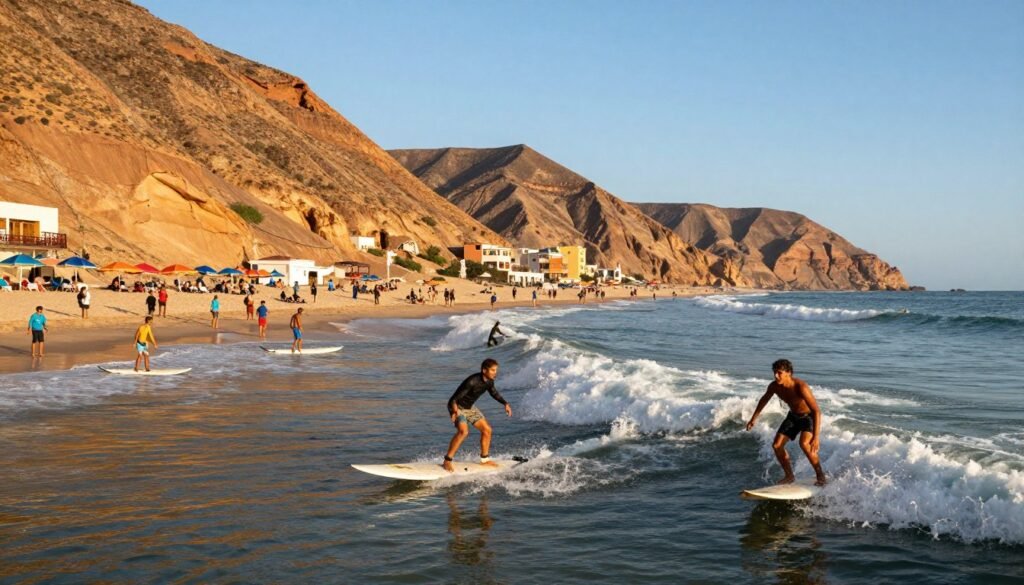
Start With Tamraght and Crocro Beach for Accessible Beginner Waves
For new surfers, Tamraght and Crocro Beach offer an ideal place to start. Sandy bottoms and gentle whitewater help us practice balance without heavy reef breaks.
- Consistent conditions: Perfect for daily practice.
- Safety: Sandy seafloors reduce the risk of injury.
- Accessibility: Easy entry and exit points for beginners.
Try Banana Point and Devil’s Rock as We Build Confidence
As we control our boards better, we can try more challenging waves. Banana Point and Devil’s Rock rank among the top surfing spots in Morocco for intermediate surfers. These places help us practice longer rides and navigate green, unbroken waves.
Visit K11, K12, and Anza for Different Wave Shapes and Crowds
When ready to explore, we can visit K11, K12, and Anza for varied wave shapes. These spots often have different crowd levels, so we may find a quieter peak. We should watch the local lineup before paddling out and learn its current flow.
| Spot Name | Difficulty Level | Best For |
|---|---|---|
| Crocro Beach | Beginner | Learning to pop up |
| Banana Point | Intermediate | Longer rides |
| Anza | Intermediate/Advanced | Varied wave shapes |
Save Anchor Point and Killer Point for Suitable Swell and Experience
These world-famous locations are not right for our first few sessions. Anchor Point and Killer Point need strong experience and specific swell conditions for safe surfing. We should target these best waves in Morocco after mastering turns and feeling fully comfortable in the lineup at the top surfing spots in Morocco.
Select a Surfboard and Wetsuit That Fit Our Ability
Choosing the right gear builds a successful surf trip in Morocco. Matching equipment to our skill level helps us learn faster and stay safer. The correct board makes every session more enjoyable for beginners and intermediate riders.
Choose a Soft-Top Longboard for Stability and First-Day Progress
For our first time in the water, a soft-top longboard is the best choice. These boards offer excellent buoyancy and stability, helping us stand up easily. They forgive falls, making them ideal for our first surf holidays in Agadir.
Move to a Funboard or Mini Malibu When We Catch Waves Independently
Once we catch whitewater waves and stand up consistently, we should choose a funboard or mini malibu. These boards balance maneuverability and stability. They help us turn and explore the wave face with greater confidence.
Select a Shortboard Only After We Control Takeoffs and Turns
We should choose a shortboard after mastering takeoffs and controlled turns on the wave face. Shortboards need more speed and precise positioning. Rushing this change can cause frustration, so solid technique helps us surf agadir morocco properly.
Check Fins, Leash, Deck, Rails, and Dings Before Entering the Water
Before paddling out, we must check our equipment for safety. We should tighten the fins, secure the leash, and inspect the deck grip. We also need to check the rails for dings or cracks that could take on water during our surf holidays in Agadir.
| Board Type | Best For | Stability | Maneuverability |
|---|---|---|---|
| Soft-Top Longboard | Absolute Beginners | Very High | Low |
| Mini Malibu | Intermediate Learners | High | Moderate |
| Shortboard | Advanced Surfers | Low | High |
Book a Lesson With a Reliable Surf School in Morocco
Finding the right instruction is the most important step in our Morocco surfing journey. We want safe, useful time in the water. A trusted provider offers local knowledge and expert guidance, helping us learn faster.
Compare Surf Schools, Surf Camps in Agadir, and Independent Instructors
When comparing surf schools in morocco, we should review each provider’s services. Some travelers choose the all-inclusive nature of surf camps in agadir, which may include accommodation, meals, and daily transport. Others choose independent instructors for personal, one-on-one lessons at a specific beach.
Read recent reviews and check the staff’s certifications. Look for a provider with a strong, long-standing reputation in the local community. Comparing choices helps us match our travel style and budget with the right option.
| Service Type | Best For | Key Benefit |
|---|---|---|
| Surf Camps | Immersive stays | All-inclusive convenience |
| Surf Schools | Structured learning | Certified group coaching |
| Independent Instructors | Flexible schedules | Personalized attention |
Confirm Small Groups, Qualified Coaches, Equipment, and Beach Transport
Good instruction depends on a low student-to-instructor ratio. Confirm that groups stay small, with no more than four to six students per coach. This size gives us enough feedback during every session.
Check that the school provides well-maintained equipment, including soft-top boards and suitable wetsuits. Reliable beach transport saves us from driving local roads with bulky gear. Ask whether the price includes insurance and professional lifeguard supervision.
Complete a Dry-Land Briefing Before Our First Paddle-Out
A thorough dry-land briefing shows that a surf school is professional. Before entering the ocean, our instructor should demonstrate board positioning and the pop-up technique on the sand. This practice builds muscle memory and confidence before we meet the waves.
The briefing should explain ocean safety, including how to identify currents and understand the local break. We should feel comfortable asking questions during this time. Clear water rules prevent confusion once we begin surfing.
Ask About Cancellation Policies, Medical Requirements, and Weather Changes
Clarify the details before finalizing our booking. Ask about the provider’s cancellation policy if our travel plans change unexpectedly. Also tell instructors about medical conditions so they can protect our safety.
Ask how the school handles sudden weather changes or poor swell conditions. A professional team may move the lesson to a sheltered beach or reschedule it for a better tide. Preparing for these changes helps keep our surfing experience positive and stress-free.
Follow Our First Surf Session Step by Step
Before we paddle out, we use a clear plan to master our first waves when we surf agadir morocco. This method builds confidence and keeps us safe in Atlantic waters.
Step Into the Water Only After We Watch the Break
We watch the ocean for at least ten minutes before entering. This shows us where waves break and where calmer channels lie.
Watching the ocean helps us understand the rhythm of each set. We choose the safest entry point and avoid fighting the incoming tide.
Warm Up, Practice Popping Up, and Position the Board Correctly
A proper warm-up prepares our muscles for the ocean’s physical demands. We stretch our shoulders, back, and legs to help prevent injury.
On the sand, we practice our pop-up technique again and again. We position the board with its nose slightly above the water to prevent pearling.
Paddle for Whitewater Waves Before Attempting Unbroken Green Waves
We begin with whitewater waves, the broken remains of larger swells. They give us a stable platform to practice balance when we surf agadir morocco.
After mastering these waves, we try unbroken green waves. This steady progress keeps us safe and teaches us to manage the board’s speed.
Keep Our Eyes Open, Stay Relaxed, and Ride Straight to Shore
When we catch a wave, we look toward the beach instead of our feet. Staying relaxed helps our body respond naturally to the board’s movement.
We ride straight toward shore to stay stable. This simple skill builds a base for future maneuvers.
Return to the Beach When We Feel Tired or Lose Board Control
Surfing demands strength, and fatigue can cause poor decisions. We return to the sand at once if we feel exhausted or lose control of our equipment.
Knowing our limits shows smart surfing. Safety matters most during our experience when we surf agadir morocco.
| Skill Level | Wave Type | Primary Goal |
|---|---|---|
| Beginner | Whitewater | Mastering the pop-up |
| Intermediate | Green Waves | Learning to trim |
| Advanced | Reef Breaks | Executing turns |
Read Agadir Waves and Improve Our Technique
Reading the ocean is vital when exploring the top surfing spots in Morocco. By watching the water first, we can find the best wave zones and avoid needless hazards.
Identify Channels, Peaks, Rips, Shorebreaks, and Safe Entry Points
We look for the “channel,” a deeper area where waves do not break. It lets us paddle to the lineup without fighting incoming whitewater. We also scan for rip currents, calm, dark water moving away from shore.
- Peaks: The highest point where the wave begins to break.
- Shorebreaks: Powerful waves that crash directly onto the sand, requiring caution during entry.
- Safe Entry: Always look for a clear path that avoids rocks or heavy impact zones.
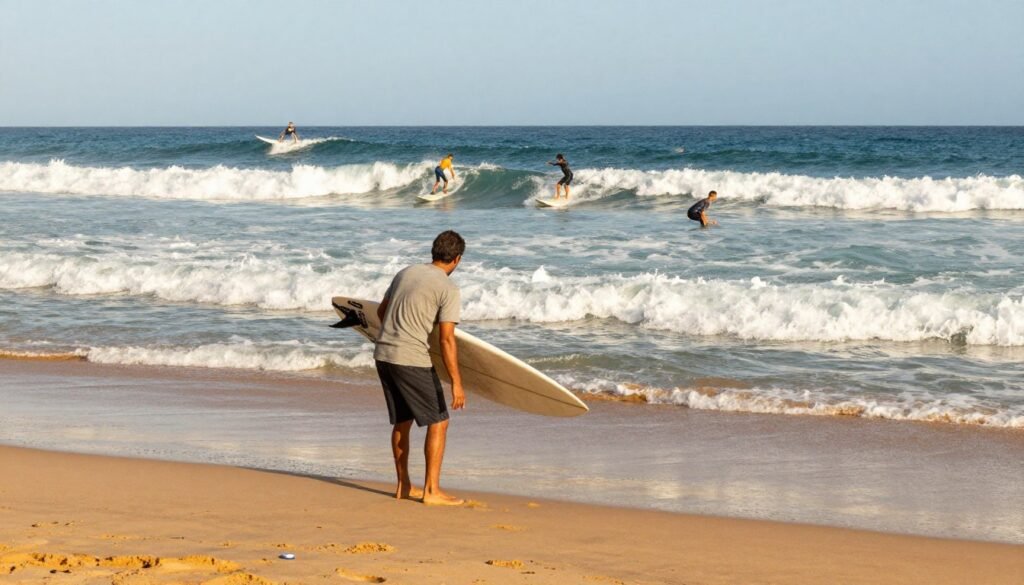
Use the Correct Angle for Takeoff on Lefts and Rights
When we find a wave, our takeoff angle guides the success of our ride. For a right-hand wave, angle the board right as we pop up. This initial direction keeps us on the open wave face, not in whitewater.
The same idea works for left-hand waves, so we angle the board left. This angle stops us from “pearling,” or nose-diving into the trough. We practice this movement on land to build muscle memory for the water.
Practice Trim, Bottom Turns, and Controlled Exits
After standing, we use trim to keep speed. We shift our weight forward or backward to find the “sweet spot,” where the board glides smoothly. Next, we use a bottom turn, leaning into the rail to redirect our path.
Controlled exits matter as much as the ride. When the wave loses power or closes out, we kick out over its back. This keeps us safe and prevents collisions with other surfers.
Adjust Our Position as the Tide, Wind, and Crowd Change
Our agadir surfing guide shows that the ocean keeps changing. A peak may work at low tide but disappear or become shallow as the tide rises. We watch wind direction because offshore winds groom waves, while onshore winds make them messy.
Crowd levels also guide where we sit in the lineup. If one peak gets too busy, we move to a quieter section of the break. Flexible positioning helps us catch more waves throughout the day.
Apply Essential Surf Safety at Every Moroccan Break
Safety guides every successful session while we are surfing in North Africa. The ocean changes quickly, and knowing its hidden risks helps us enjoy the water with confidence. Following safety rules protects us and shows respect for the local surfing community.
Learn Local Priority Rules and Avoid Dropping In
The key lineup rule is simple: the surfer closest to the peak has priority. Before paddling for a wave, we must check whether another surfer is already riding it. Dropping in is dangerous and shows poor etiquette.
When priority is unclear, waiting for the next wave is safer. Respecting the lineup keeps everyone safer and helps all surfers enjoy their sessions. We should watch the crowd’s movement for a few minutes before entering the water.
Handle Rip Currents by Staying Calm and Paddling Parallel
Rip currents are powerful water channels that can pull us away from shore. If one catches us, the most important step is to stay calm. Panicking causes exhaustion, the greatest danger in the water.
Rather than fighting the current toward shore, we should paddle parallel to the shoreline. Once outside the channel, the current loses strength. We can then catch a wave or paddle back at an angle.
Protect Ourselves From Rocks, Reefs, Strong Waves, and Sun Exposure
Many breaks here have rocky bottoms or shallow reefs, so we must use caution. Booties help protect our feet when entry points are sharp or uneven. We must also protect skin from strong sun with reef-safe sunscreen and rash guards.
Strong waves can damage equipment or cause injury. During a wipeout, we should hold our board firmly so it does not hit us. Keeping distance from other surfers helps prevent collisions in crowded conditions.
Know When to Ask Lifeguards, Instructors, or Experienced Surfers for Help
There is no shame in seeking guidance when we feel overwhelmed. Professional surf schools in morocco offer skilled instructors who explain each beach’s specific hazards. When lifeguards are on duty, we should ask about current conditions before paddling out.
| Safety Factor | Action Required | Goal |
|---|---|---|
| Rip Currents | Paddle Parallel | Escape the pull |
| Lineup Etiquette | Wait for Priority | Prevent collisions |
| Sun Exposure | Apply Zinc/Sunscreen | Avoid skin damage |
| Rocky Entry | Wear Booties | Protect feet |
Build a Multi-Day Surfing Vacation in Agadir
A successful surfing vacation in Agadir depends on managing our energy throughout the week. By balancing hard sessions with planned downtime, we keep our bodies ready for the water. This plan helps us enjoy the coast without burning out early.
Alternate Water Time With Rest, Mobility Work, and Recovery
We must prioritize recovery to maintain strong performance. Too much time in the ocean can cause fatigue and muscle soreness, slowing our progress.
- Incorporate daily stretching to improve hip and shoulder mobility.
- Schedule at least one full day of rest for every three days of surfing.
- Hydrate consistently and consume local, nutrient-dense Moroccan foods.
Progress From Beginner Beaches to the Best Waves in Morocco
Sustainable growth comes from challenging ourselves step by step. We start on gentle, sandy-bottomed beaches to build confidence before trying more technical breaks.
As our skills improve, we can move to the best waves in Morocco. This path keeps sessions exciting and lowers injury risk in challenging conditions.
| Skill Level | Recommended Location | Focus Area |
|---|---|---|
| Beginner | Tamraght | Board control |
| Intermediate | Banana Point | Turning technique |
| Advanced | Anchor Point | Wave selection |
Plan Surf Sessions Around Morning Winds and Daily Energy Levels
Afternoon winds often grow stronger, so early sessions offer the best conditions. We aim to reach the water at dawn during our surf holidays in agadir.
We monitor our energy levels closely throughout the day. If we feel tired, we choose a shorter session or light paddle instead of facing heavy surf.
Use Non-Surf Days to Explore Agadir, Taghazout, Markets, and Coastal Viewpoints
Time off the board lets us experience local culture. We visit Agadir’s lively markets or enjoy coastal views near Taghazout.
Exploring the region helps us value its unique beauty. We can browse local crafts or relax at a seaside café. These activities enrich our surf holidays in agadir and prepare us for the best waves in morocco.
Respect Local Communities While We Surf and Travel
Our surf holidays in Agadir become richer when we respect local people and the environment. Thoughtful choices help our visit benefit the region.
Follow Beach Etiquette and Keep Shared Peaks Clean
Surfing is a shared experience, so harmony in the water matters. We stay patient at crowded breaks and follow local priority rules, keeping the lineup safe.
We also keep beaches clean by picking up litter. This helps protect Morocco’s beautiful coastline for future generations of surfers.
Support Local Surf Schools, Guides, Shops, Cafés, and Accommodation
Spending money locally directly benefits residents of Agadir and Taghazout. We book lessons with local surf schools and eat at family-owned cafés.
Local guides and community-run guesthouses offer authentic views of Moroccan culture. This approach turns a standard trip into a meaningful surfing vacation in Agadir.
Dress Appropriately Away From the Beach and Learn Useful Moroccan Arabic Phrases
Morocco has rich cultural traditions and modest customs. Beachwear is fine on the sand, but we cover up in villages and markets.
Learning basic Moroccan Arabic phrases, such as “Shukran” (thank you) or “Salam” (hello), shows respect. These gestures help us connect with people during our surf holidays in Agadir.
Reduce Plastic Waste and Protect Rocky Shores and Marine Life
We take responsibility for protecting the fragile marine ecosystem. Reusable water bottles and fewer single-use plastics help keep pollution out of the ocean.
Careful travel helps preserve the rocky shores and reefs that make this region a world-class destination. The table shows respectful, sustainable choices for our travels.
| Category | Action | Benefit |
|---|---|---|
| Environment | Carry out all trash | Protects marine life |
| Culture | Dress modestly in town | Shows local respect |
| Economy | Shop at local markets | Supports local families |
| Social | Learn basic Arabic | Builds better rapport |
Conclusion
Mastering Atlantic waves takes preparation, patience, and respect for the ocean. We can surf agadir morocco with confidence by matching our goals to seasonal swells and local conditions.
A successful surfing vacation in agadir depends on how well we adapt to the environment. We must put safety first, care for our equipment, and enjoy the vibrant local culture. These choices help us make the most of our time in the water.
Improvement remains possible for every skill level. We can book a session with a reputable school like Surf Berbere or choose a Taghazout base for our travel style.
Our adventure begins with one decision to commit to the process. We should secure our gear, check the daily forecast, and visit the beach. There, we can experience the Moroccan coastline’s unique energy.
